
Batch Swap USDC non-custodially with HoudiniSwap across 100+ chains.
Transact Freely. Stay Private.









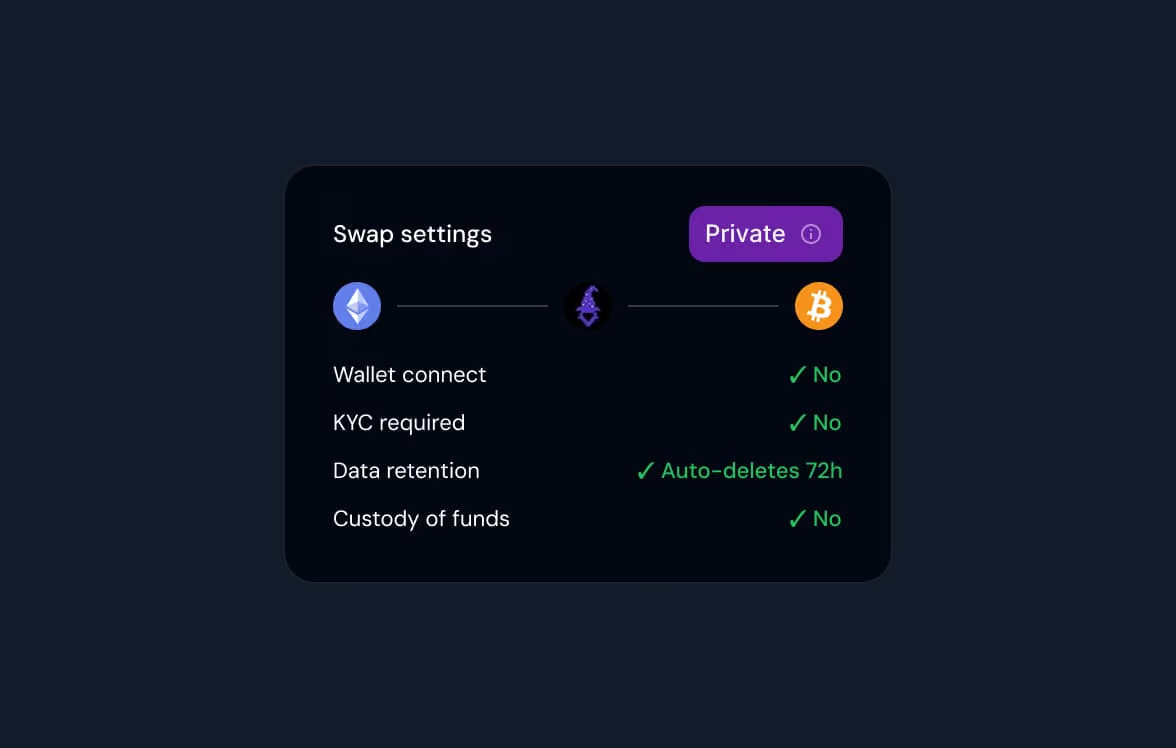
When you send USDC to multiple addresses in a batch, chain analysis tools cluster those transactions around your source wallet and reconstruct your full payout structure instantly. They can identify every recipient, the exact amount each received, and the timing of the entire operation. HoudiniSwap creates a separate, independently routed swap order for each recipient so no on-chain observer can link any individual USDC transfer back to the source or connect recipients to one another.
Batch USDC payouts made through a public address give competitors, clients, and chain analysis firms a real-time view of your supplier relationships, payroll obligations, and total cash flow. A single batch transfer can reveal more about your business operations than a quarterly report. HoudiniSwap routes each USDC order through its own private path so the amounts, recipients, and timing of your entire payout operation stay completely off the public record.
A public batch USDC transfer links every recipient address to the source wallet and to every other address in the same batch, giving chain analysis tools a ready-made cluster. HoudiniSwap routes each order independently so recipient addresses have no visible on-chain connection to the source or to each other. Every party in the batch stays private regardless of how many wallets are included.




USD Coin (USDC) is a fully reserved dollar-pegged stablecoin issued by Circle and available natively on Ethereum, Solana, Base, Avalanche, and a growing number of other chains. It is the most widely used stablecoin for institutional payments, treasury management, and on-chain payroll because of its regulatory backing and multi-chain availability. Because USDC lives on fully transparent public blockchains, anyone running multi-recipient USDC distributions through a standard wallet is broadcasting a detailed map of their financial operations to every on-chain observer, making private batch swaps essential for any meaningful stablecoin payout flow.
Every batch swap is grouped under a shared identifier that lets you monitor the status of all orders simultaneously through a single endpoint. Each order progresses independently through its own lifecycle, from deposit detection through to completion. Private orders include an additional anonymising stage, which means they typically complete within 15 to 45 minutes depending on network conditions.