
Batch Swap SOL non-custodially with HoudiniSwap across 100+ chains.
Transact Freely. Stay Private.









Solana's high throughput means chain analysis tools can index and cluster multi-recipient SOL transfers faster than on almost any other network. The moment you send SOL to multiple addresses from a single source, every recipient is linked to your wallet and to each other in seconds. HoudiniSwap creates a separate, independently routed swap order for each destination so no on-chain observer can reconstruct the batch or trace any individual transfer back to the originating address.
Solana wallets that hold SOL and interact with DeFi protocols, NFT platforms, or staking infrastructure carry some of the richest on-chain profiles of any address in crypto. When you send a batch SOL payout from a wallet with that kind of history, every recipient gains access to your full on-chain profile the moment the transfer confirms. HoudiniSwap routes each order through a clean private path so recipients see nothing about the source wallet and your Solana activity stays completely compartmentalised.
A public multi-recipient SOL transfer permanently links every destination address to the funding wallet and to every other recipient in the same cluster. HoudiniSwap routes each order independently, breaking every one of those links before they form. No address in the batch has any visible on-chain connection to the source or to any other recipient regardless of how many wallets are included in the distribution.


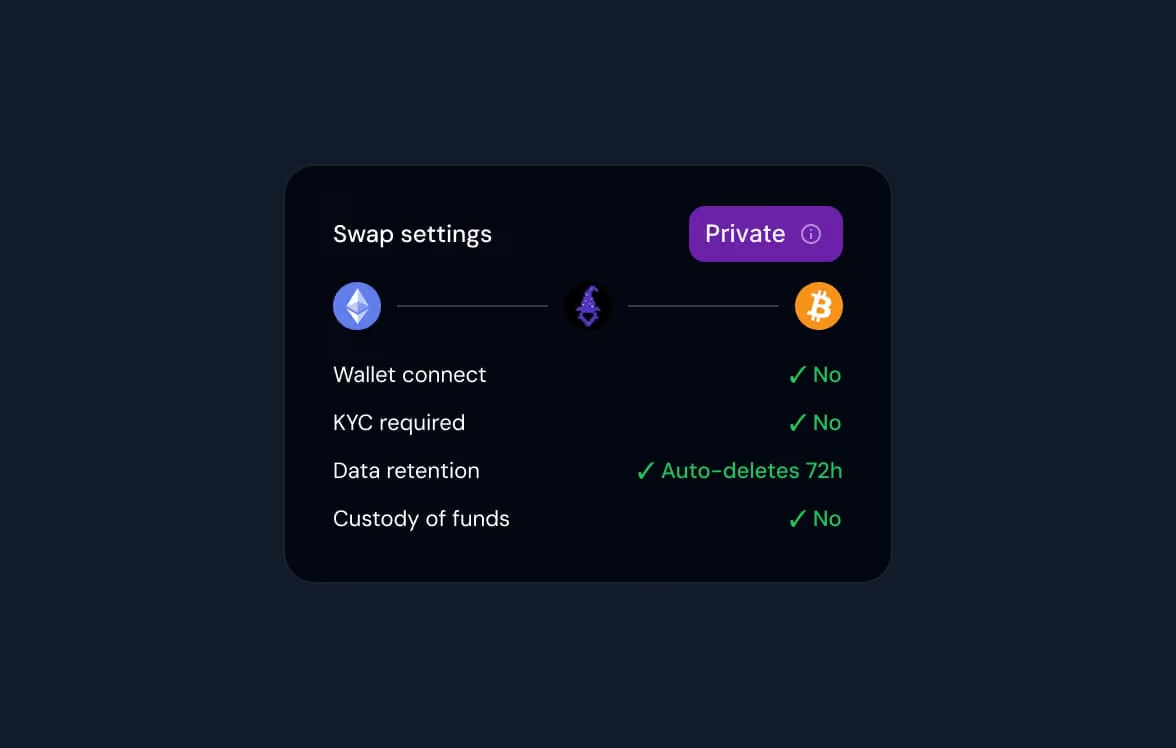


Solana (SOL) is a high-throughput layer-1 blockchain built for fast, low-cost transactions and one of the most actively used networks in crypto. SOL is used to pay for network transactions, participate in DeFi and NFT ecosystems, and move value at speeds that most other blockchains cannot match. Solana wallets are among the data-richest addresses in crypto because of how much activity the network supports, which makes running multi-recipient SOL distributions privately essential for anyone who does not want their payout operations reconstructed by chain analysis tools.
Every batch swap is grouped under a shared identifier that lets you monitor the status of all orders simultaneously through a single endpoint. Each order progresses independently through its own lifecycle, from deposit detection through to completion. Private orders include an additional anonymising stage, which means they typically complete within 15 to 45 minutes depending on network conditions.