Swap ADA non-custodially with HoudiniSwap across 100+ chains.
Transact Freely. Stay Private.







Cardano exposes more about a holder than most chains, because staking is built into the address itself. Every ADA address carries a staking credential, which means the wallet you transact from and the stake you delegate are linked by design, and a single address can reveal your entire balance across every address sharing that credential. Add an eUTXO ledger where change outputs tie transactions together, and one ADA address can map your whole position. Swapping privately breaks that link.

Cardano addresses combine a payment credential with a staking credential, so every address in a wallet shares the same stake key. Anyone who sees one of your addresses can query the stake key and pull the total balance held across all of them, along with your full delegation history. That is a level of aggregation most chains do not offer. A private swap moves funds to a destination under a different stake credential, so the two positions never resolve to the same holder.
Stake pool delegation on Cardano is public. Anyone can see which pool you delegate to, how much you have staked, how long you have been delegating, and every reward you have earned. Watched over time, that reveals both the size of your position and when you move it. Routing through a private layer means the wallet you stake from carries no visible connection to the one that funded it.
Cardano's eUTXO model means every ADA you spend carries a traceable history, and every transaction produces change that ties straight back to your wallet. Analytics tools follow that change to cluster addresses and build a picture of your holdings, the same way they do on Bitcoin. A private swap gives you a clean starting point with no prior clustering and no inherited history.




ADA is the native token of Cardano, a proof-of-stake blockchain built on peer-reviewed research and an extended UTXO accounting model. ADA is used to pay transaction fees, to delegate stake to pools for network security and rewards, and to participate in on-chain governance. Balances, delegation, and rewards are all recorded publicly on the ledger.
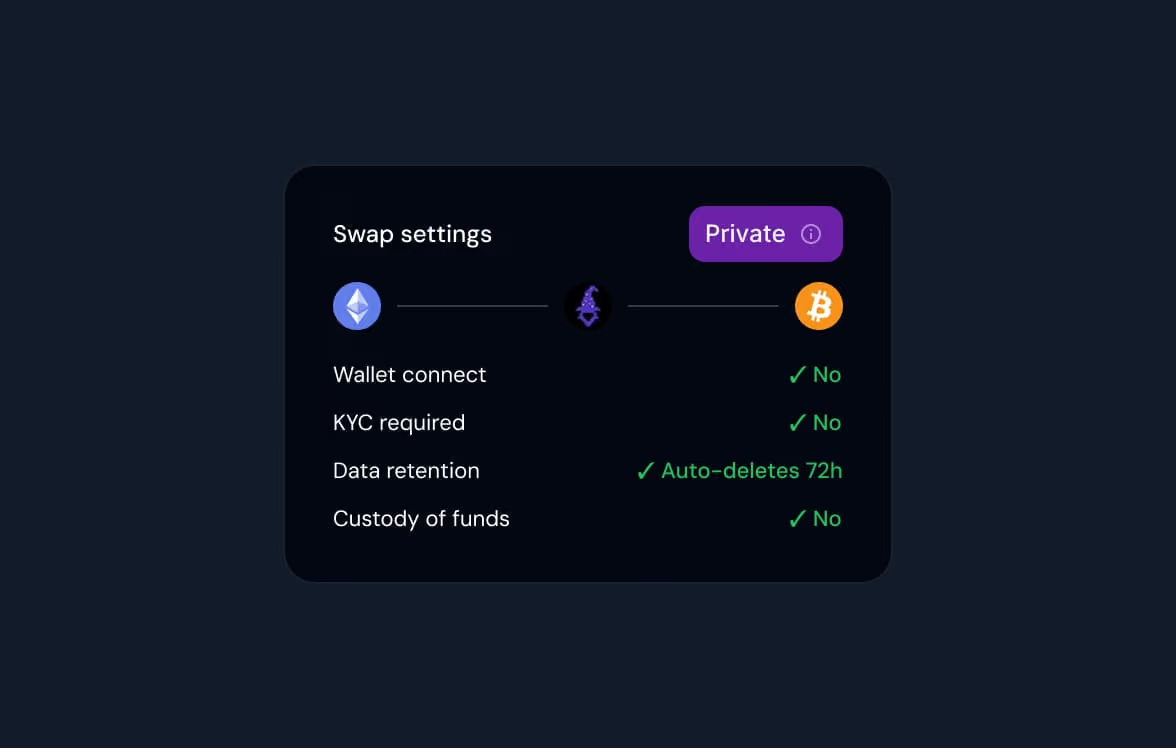
Houdini Swap does not charge any fees in addition to our exchange partners. As an aggregator of routes, Houdini Swap sources the lowest cost transaction path from hundreds of possible routes and for millions of possible token pairs. A fee comparisons with legacy swap providers can confirm Houdini Swap fees are the same or better.