
Decentralized finance is booming in 2025, with millions seeking new ways to swap crypto safely and efficiently. As the DeFi landscape evolves, cowswap crypto has emerged as a trusted tool for beginners looking to make secure, optimized swaps.
This guide breaks down everything you need to know about cowswap crypto. You will learn the basics, step-by-step usage, security essentials, platform comparisons, and key DeFi strategies.
Curious about protecting your assets while swapping? Ready to experience a user-friendly approach? Dive in and let cowswap crypto simplify your first DeFi swap.
Understanding Cowswap: The Basics
Cowswap crypto has rapidly emerged as a leading tool in the decentralized finance (DeFi) ecosystem, offering users a streamlined way to swap digital assets without relying on traditional order books. At its core, cowswap crypto operates as a decentralized exchange (DEX) aggregator, connecting traders with the best available prices across multiple platforms. Unlike conventional DEXs, it uses batch auctions and the CoW Protocol to optimize trades, protect against manipulation, and deliver fair outcomes. In 2024, daily trading volumes exceeded $10 million, illustrating the platform's growing influence in the DeFi space.

What is Cowswap?
Cowswap crypto is designed to aggregate liquidity from multiple decentralized exchanges, ensuring users always get the most competitive rates. Rather than matching buyers and sellers instantly, cowswap crypto leverages batch auctions, where trades are grouped and executed together. This approach, powered by the CoW Protocol, eliminates the need for direct order books, reducing the risk of price manipulation and front-running. The platform's focus on MEV (Miner Extractable Value) protection distinguishes it from traditional DEXs, offering users a safer and more predictable trading environment.
How Cowswap Works: Batch Auctions Explained
The batch auction mechanism at the heart of cowswap crypto groups user orders over short intervals, then executes them simultaneously for optimal pricing. This model significantly reduces slippage and shields users from front-running, a common risk in DeFi swaps. By executing trades in batches, cowswap crypto can secure better aggregate prices and distribute savings among participants. For a deeper dive into how batch auctions power efficient and fair swaps, consult the CoW Protocol Batch Auctions Explained documentation.
Supported Tokens and Wallets
In 2025, cowswap crypto supports a broad spectrum of assets, including:
- Ethereum (ETH)
- Major stablecoins (USDT, USDC, DAI)
- Leading ERC-20 tokens
Popular wallets compatible with cowswap crypto include MetaMask, WalletConnect, and hardware wallets like Ledger. For example, users can easily swap USDT for ETH by connecting their MetaMask wallet. As with all DeFi activities, wallet security is paramount—always safeguard your seed phrase and verify official sites before connecting.
Fees and Cost Structure
Cowswap crypto applies a transparent fee model, comprising protocol fees and standard network gas costs. Fees are typically competitive with other leading DEXs, and many users find transaction costs lower due to optimized trade execution. On average, a swap might cost less than $5 on Layer 2 networks, compared to higher fees on mainnet platforms. This cost efficiency, combined with robust security, makes cowswap crypto a compelling choice for DeFi users.
Step-by-Step: How to Use Cowswap in 2025
Navigating the cowswap crypto platform can feel overwhelming at first, but breaking down each step helps you swap tokens with full confidence. Whether you are new to DeFi or looking to refine your process in 2025, use this walkthrough to make your experience smooth and secure.

Preparing Your Wallet and Funds
To get started with cowswap crypto, choose a secure wallet that supports DeFi swaps. MetaMask remains one of the most popular options, but hardware wallets like Ledger offer enhanced protection. Always download wallet software from official sources and back up your seed phrase in a safe, offline location.
Before connecting to cowswap crypto, ensure your wallet holds enough of the token you want to swap and a small amount of ETH or another native token to cover gas fees. In 2024, MetaMask saw a surge in DeFi user adoption, reflecting the growing trust in secure wallet solutions.
Security is critical. Double-check web addresses, use hardware wallets for large amounts, and never share your seed phrase. For a detailed walkthrough on choosing the right wallet, visit the Best Crypto Swap Wallet Guide.
Connecting to Cowswap and Selecting Tokens
Once your wallet is ready, go to the official cowswap crypto interface. Connect your wallet using the prompt—most platforms support MetaMask, WalletConnect, and hardware wallets.
Select the token you want to swap and the token you wish to receive. For example, swapping DAI for USDC is straightforward. The cowswap crypto platform will automatically pull the best available rates for your pair, streamlining your experience.
Always confirm you are on the verified website before connecting your wallet.
Confirming and Executing Your Swap
Review all swap details on the cowswap crypto interface, including price, slippage tolerance, and estimated fees. Make sure you are comfortable with the numbers before proceeding.
Click "Swap," then approve the transaction in your wallet. You may be prompted to confirm token approval if it is your first time swapping a particular asset. On Ethereum mainnet, transactions can take several minutes, while Layer 2 networks like Arbitrum often complete swaps in under a minute.
After submitting, monitor the transaction status in your wallet or on a blockchain explorer. Cowswap crypto provides clear feedback on each step, so you know when your swap is finalized.
Troubleshooting and Common Issues
Even with a streamlined process, issues can arise. Common problems on cowswap crypto include:
- Failed swaps due to insufficient gas or unapproved tokens
- Wallet connection errors
- Delays in transaction confirmations
Solutions include increasing your gas limit, ensuring token approval, and refreshing your browser. If you encounter persistent issues, consult the cowswap crypto support documentation or join community forums for real-time help. Staying calm and methodical will usually resolve most problems quickly.
Security, Privacy, and MEV Protection on Cowswap
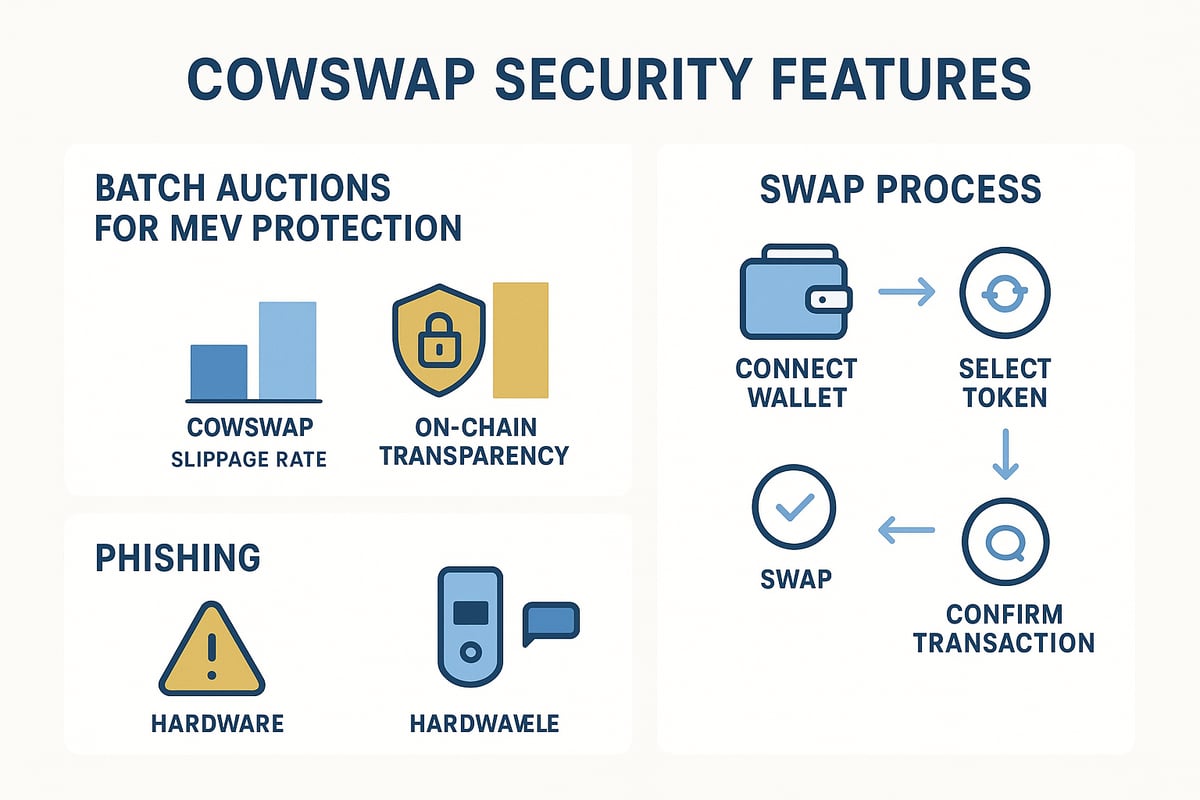
Security is a top concern for anyone using cowswap crypto in the DeFi space. Understanding how Cowswap addresses MEV, privacy, and platform safety is essential for protecting your assets while swapping tokens in 2025. This section breaks down the risks, solutions, and best practices to help you swap with confidence.
MEV (Miner Extractable Value) and Front-Running Risks
Miner Extractable Value (MEV) refers to profits miners or validators can gain by manipulating the order of transactions within a block. In DeFi, MEV often leads to front-running, where malicious actors spot your swap and insert their own trades to profit at your expense. This can result in higher costs or worse prices for users of cowswap crypto.
Cowswap crypto addresses MEV risks by leveraging batch auctions. Instead of processing swaps one by one, Cowswap groups user orders and executes them together. This design makes it nearly impossible for attackers to predict or manipulate transaction order, greatly reducing front-running and slippage.
Batch auctions have led to significant user savings. According to recent data, Cowswap's approach has outperformed traditional DEX models in protecting users from MEV threats. For a deeper dive into how these mechanisms work, see this CoW Protocol's MEV Protection Analysis. By choosing cowswap crypto, users benefit from a fairer and more secure trading environment.
Privacy Considerations in DeFi Swaps
On-chain transparency is a double-edged sword for cowswap crypto users. While blockchain records ensure openness and traceability, every swap is visible to the public. Cowswap processes all transactions on-chain, so your wallet addresses and swap details are accessible to anyone with a block explorer.
Cowswap crypto is built for secure, efficient swaps, but it does not focus on privacy beyond standard blockchain practices. If you require advanced privacy, you may want to compare Cowswap with platforms designed for more anonymous swaps, as privacy features vary widely across DeFi protocols.
Keep in mind that while Cowswap minimizes data exposure, it cannot fully shield your transactions from public view. Always assess your privacy needs before swapping.
Best Practices for Secure Swapping
Security is paramount when using cowswap crypto, especially with the rise of sophisticated scams in DeFi. Here are essential practices to keep your assets safe:
- Use hardware wallets for storing funds and confirming swaps.
- Always verify the Cowswap URL before connecting your wallet.
- Check and limit wallet permissions after each swap.
- Be cautious of phishing emails or fake support channels.
- Regularly back up your wallet's seed phrase in a secure location.
A common attack in 2024 involved fake Cowswap interfaces tricking users into sharing private keys. Stay vigilant and double-check every interaction. Following these tips will help you use cowswap crypto securely and confidently.
Staying Updated on Security Developments
The DeFi landscape evolves rapidly, making continuous learning essential for cowswap crypto users. Subscribe to Cowswap's official channels for timely updates on security patches and new features.
Engage with the Cowswap crypto community to share experiences and learn from others. Participate in protocol audits and discussions to stay informed about emerging risks. Take advantage of educational resources to strengthen your understanding of DeFi security best practices.
By staying proactive, you can better protect your assets and adapt to new security challenges as they arise.
Comparing Cowswap to Other DeFi Swap Platforms
Navigating the DeFi landscape in 2025 means choosing between several innovative swap platforms. For newcomers exploring cowswap crypto, understanding how it stacks up against Uniswap, 1inch, and others is essential. Each platform offers unique features that shape the user experience, cost, and security of your swaps.
Cowswap vs. Uniswap, 1inch, and Others
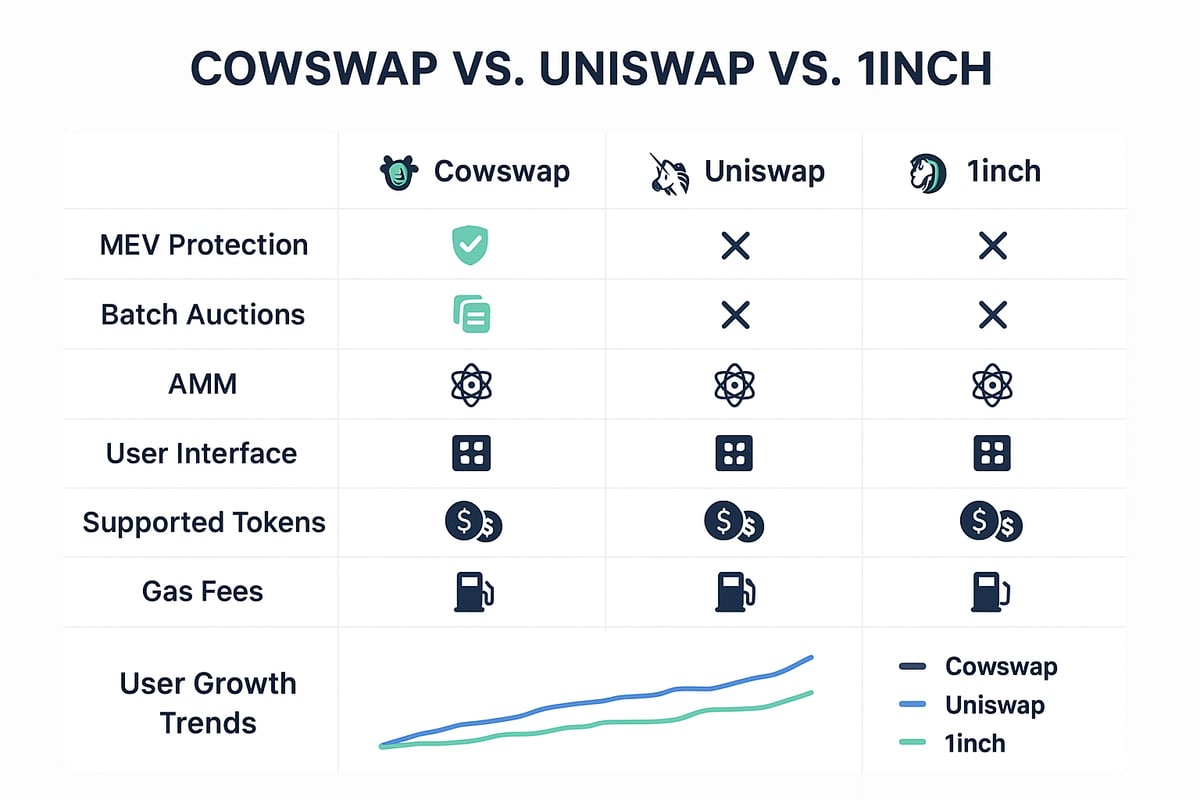
Cowswap crypto stands out with its batch auction model, which contrasts with the AMM approach seen on Uniswap and 1inch. Batch auctions group users' orders together, maximizing price efficiency and reducing slippage. This model also provides strong protection from front-running and MEV attacks.
Here is a quick comparison:
Feature Cowswap Crypto Uniswap 1inch Price Execution Batch auctions AMM pools Aggregator/AMM MEV Protection Yes Limited Partial Supported Tokens 1,000+ 900+ 1,200+ User Interface Simple Intuitive Advanced Gas Optimization High Medium High
Batch auctions on cowswap crypto can save users up to 30% in gas costs compared to individual AMM swaps. In 2024, Cowswap reported a daily trading volume surpassing $10M, reflecting rapid user growth. For a broader look at platform comparisons, visit Compare Crypto Swap Platforms.
Strengths and Weaknesses of Cowswap
Cowswap crypto's main strengths are its innovative MEV protection, fair price execution, and easy-to-use interface. These features make it appealing for both beginners and seasoned DeFi users.
However, cowswap crypto does have some limitations. It may support fewer chains than multi-chain DEXs, and liquidity depth can vary for less popular tokens. When seeking optimal protection against front-running or trading major ERC-20 tokens, Cowswap is often the preferred choice.
User Experience and Community Feedback
User reviews highlight cowswap crypto's intuitive design and transparent fee structure. On platforms like Reddit and Twitter, users praise its MEV protection and fair pricing. Some complaints mention occasional delays during peak network congestion.
The Cowswap team is known for actively responding to user suggestions, rolling out frequent updates, and engaging with the community to improve the platform.
Alternatives for Privacy-Focused Swaps
While cowswap crypto offers strong security and MEV protection, some users prioritize privacy above all. Privacy-centric swap platforms focus on minimizing transaction traceability.
Consider these alternatives if you require maximum anonymity, especially when moving assets across chains. Remember, privacy features can come with higher fees or longer swap times, so weigh these trade-offs before choosing a platform.
Essential DeFi Strategies for Beginners Using Cowswap
Entering the DeFi world can feel overwhelming, but starting with the right strategies makes all the difference. If you are new to cowswap crypto, learning how to maximize efficiency, manage risk, and expand your activity beyond basic swaps sets a strong foundation for your DeFi journey. Let us break down the essentials for beginners.
Maximizing Swap Efficiency and Minimizing Costs
One of the first steps in using cowswap crypto wisely is to minimize transaction costs and slippage. Gas fees can fluctuate dramatically, especially on Ethereum mainnet. Timing your swaps when network congestion is low often results in significant savings. For even lower fees, consider using Layer 2 solutions like Arbitrum or Optimism, which are fully supported by cowswap crypto.
Cost Comparison Table
Network Average Gas Fee (2025) Ethereum $12 Arbitrum $0.60
By moving your swaps to L2, you can reduce costs by over 90%. Monitor network activity before executing large trades, and always review fee estimates before confirming any transaction.
Diversifying Tokens and Managing Risk
Diversification is a core principle in DeFi, especially when using cowswap crypto. Rather than holding a single asset, spreading your portfolio across stablecoins, ETH, and major ERC-20 tokens helps reduce risk. Cowswap crypto makes it easy to rebalance your assets with a few clicks, letting you swap between tokens efficiently during periods of volatility.
For example, if the market becomes unstable, you might swap a portion of your holdings from ETH to USDC or DAI. This approach shields your portfolio from sudden price swings and positions you for future opportunities.
Participating in DeFi Ecosystems Beyond Swaps
After completing a swap with cowswap crypto, do not let your assets sit idle. Consider exploring other DeFi opportunities such as staking, lending, or yield farming. Many protocols offer attractive returns for providing liquidity or participating in lending pools.
Cowswap crypto integrates with multiple DeFi platforms, enabling you to move assets seamlessly from a swap to a staking contract or lending protocol. For example, after swapping ETH for a stablecoin, you could deposit your USDC into a lending pool to earn passive income while maintaining flexibility for future swaps.
Staying Informed and Avoiding Common Mistakes
The cowswap crypto landscape evolves quickly, making continuous learning essential. Stay updated on DeFi news, protocol upgrades, and security practices by following reputable sources and joining community discussions. Many beginners make errors such as selecting the wrong token, setting inappropriate slippage, or falling for phishing scams.
Common Beginner Mistakes:
- Swapping unsupported tokens
- Ignoring slippage settings
- Clicking suspicious links
Resources like official documentation, DeFi education hubs, and community forums can help you avoid pitfalls and refine your strategies. As innovation continues, keep an eye on new features and developments, such as those outlined in the Roadmap to Crypto Swap Innovation.
The Future of Cowswap and DeFi Swapping in 2025
The DeFi landscape is rapidly evolving, and so is cowswap crypto. As we look ahead to 2025, users can expect significant innovations, shifting regulations, and a growing role for Cowswap within the decentralized finance ecosystem. Staying informed and adaptable will help both new and experienced users thrive in this dynamic environment.
Innovations and Upgrades on the Horizon
In 2025, cowswap crypto is set to introduce several key upgrades. Multi-chain support is a top priority, enabling users to swap assets across more blockchain networks with ease. The user interface will also see improvements, making navigation smoother and swaps even more intuitive.
Industry trends point toward cross-chain interoperability and enhanced privacy features. Cowswap's community has proposed advanced batch auction mechanisms and integration with new DeFi protocols. These upgrades will reinforce cowswap crypto's position as a leading DEX aggregator.
For a deeper dive into upcoming batch auction techniques and MEV protection, review CoW Swap's Intent-Based Trading and MEV Protection, which highlights how intent-based trading is shaping Cowswap's roadmap. Staying engaged with community proposals ensures users can benefit from the latest innovations.
Regulatory and Compliance Considerations
DeFi regulations continue to evolve across major markets, affecting how platforms like cowswap crypto operate. While many jurisdictions are introducing clearer guidelines, Cowswap remains committed to enabling KYC-free swaps. This approach allows users to maintain privacy and control over their financial data.
However, regulatory shifts could impact the availability of certain features or tokens. Cowswap crypto actively monitors the legal landscape and adapts its protocols to comply with emerging requirements. Users should stay informed about local regulations to avoid unexpected restrictions.
Staying compliant does not mean sacrificing decentralization. Cowswap's design allows for flexible adaptation without compromising core DeFi principles. Legal impacts will depend on each user's jurisdiction and the pace of regulatory change.
The Role of Cowswap in the Broader DeFi Landscape
Cowswap crypto has established itself as a top DEX aggregator, competing with platforms like Uniswap and 1inch. Its unique batch auction model and focus on MEV protection attract users seeking fairer pricing and lower exposure to front-running.
As DeFi adoption accelerates, Cowswap's influence is expected to grow. Projections from sources like Messari and DappRadar suggest millions of new users entering DeFi by 2025. Cowswap crypto is well-positioned to support this expansion with a robust, user-friendly platform.
The continued integration with emerging protocols and Layer 2 solutions will further cement Cowswap's role in the ecosystem. By bridging liquidity and offering efficient swaps, Cowswap is a catalyst for mainstream DeFi adoption.
Tips for Staying Ahead in DeFi
To make the most of cowswap crypto in 2025, continuous learning is key. Engage with the Cowswap community on forums, follow official updates, and participate in governance proposals. These activities offer insights into upcoming changes and security best practices.
Building a secure, diversified DeFi portfolio is essential. Use hardware wallets, double-check swap details, and avoid common mistakes like swapping unsupported tokens. Regularly review your strategies to adapt to market shifts or new Cowswap features.
By staying proactive and informed, users can confidently navigate the evolving world of cowswap crypto and maximize their success in DeFi swaps.
Now that you've explored how Cowswap makes DeFi swapping smarter and safer—from MEV protection to seamless cross chain support—you're ready to experience a new level of privacy and flexibility with your crypto trades. If you want to put these strategies into practice and enjoy secure swaps with all your favorite tokens, there's a straightforward way to get started. You deserve both privacy and simplicity as you navigate DeFi in 2025.
Swap privately with Houdini Swap
and take the next confident step on your crypto journey.
